Tag Archive for: back pain

What is Dry Needling?

At CJ Physical Therapy and Pilates, our goal is to help you live a pain-free life without pain pills or invasive procedures.

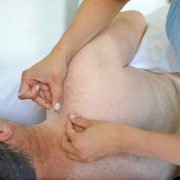
Trigger Point Dry Needling is one of several strategies we use to treat muscles that are extremely tense and in spasm. The spasm causes the muscle to be in constant tension which reduces blood flow, decreases oxygen, and can produce fibrotic unhealthy tissue over time (scarring). When a physical therapist inserts the very thin acupuncture needle (dry needle) into a knotted up muscle, it creates a local twitch reflex. Research shows that this not only relaxes the muscle, it breaks up the pain cycle by improving blood flow and oxygen to the muscle. This whole process helps to reduce and normalize inflammation in the area to promote healing. However, dry needling is not necessary for everyone, so it’s important that you know what it is and when it can be used to improve your health! Here’s our advice when it comes to pursuing dry needling treatment.

Work with a physical therapist to use dry needling in conjunction with movement based rehabilitation.

Dry needling can work wonders to relax your muscles. However, they’re just going to get tense and damaged again if you don’t learn how to use them properly and address any movement dysfunction that may be occurring. You don’t want to think of it as a quick fix! Dry needling is just the first step for some individuals who aren’t able to begin a physical therapy or movement regimen without first breaking up the pain cycles in the muscles that are prohibiting healthy movement. Dry needling serves as a “helper” to relax those muscles – and should be integrated with physical therapy treatment and strengthening activities such as Pilates.

Don’t be afraid of trying dry needling!

It can be uncomfortable for some people, but others say they feel no pain at all. It’s not dangerous and has lasting positive effects when used in conjunction with hands-on physical therapy under the direction of a specialist. Furthermore, our clients love it:

“After two back surgeries in my 20s and a new hip at 58, I figured I was lucky just to be walking. Dry needling has transformed the way I move. I’m more flexible. My walking stride has more length and I can stand longer.” – John

Do you have questions about dry needling? Want to see what a specialty physical therapy practice can do for you? We offer FREE Discovery Sessions right here in Portsmouth that give you the opportunity to ask any questions you may have! It’s a completely free, no-obligation appointment that will give you all the information you need to make the BEST decision for YOUR health. All you have to do is fill out this quick form, and we’ll be in touch!

How to NOT let Aches and Pains Ruin your New Year’s Goals

It’s that time of year, when we start looking ahead and setting goals for ourselves. It’s especially exciting now because we aren’t only entering a new year – but a new DECADE!

Exercising more and losing weight are the top New Year’s resolutions on everyone’s lists year after year. But what if you’re suffering from back or knee pain?  One of the worst things you can do is ignore pain and assume that by simply exercising more or losing weight, your ailments will just go away. It’s certainly a reasonable expectation, however, I typically see an influx of people calling my office right around March because these aches and pains have not only worsened — but derailed their New Year’s goals completely.

I don’t want to see that happen for you. So here are my top tips to NOT let aches and pains ruin your New Year’s goals:

1. Get assessed by an expert:


Your first thought might be to go see your doctor if you’re suffering from something like back or knee pain. But most medical doctors are trained to screen you for problems like broken bones or serious pathologies – not to actually assess your movement. You need to know how your pain behaves during everyday functional movements to truly fix it – and to avoid unnecessary procedures and surgery.  X-rays, MRI’s, or simply moving your limbs around on a treatment table won’t do that… but that is what a medical doctor is trained to do. A specialty physical therapy practice will be able to assess your movement in detail, through various movement tests, which will tell a much better story about how your pain may or may not impact the new exercise or weight loss program you’re about to start. Plus, we’ll be able to give you customized modifications so that you can embark on your new goal while decreasing your risk of injury.

2. Mobility before Stability:

This is a saying you hear me say all the time in my office. Your muscles won’t function at their best if you don’t have optimal joint mobility. In other words, you don’t want to strengthen around a stiff joint, or you’ll encourage compensation. Full and free mobility requires adequate flexibility in your joints as well as your muscles. Most people don’t think – or even know – how to assess their joint mobility. If you’re suffering from chronically stiff joints, you’ll want to get them checked before you start a new exercise program. I recommend seeing a movement expert, like those employed in our office, to make sure you’re ready and able to start on that new exercise program you’re so excited about!

3. Stay Hydrated:

Drinking lots of water has two great benefits. It will give you the extra hydration you need if you’re planning to be more active. And it will help you lose weight by curbing your appetite. Some additional benefits of staying hydrated include increased muscle strength and stamina, more lubrication in your joints, more supple skin, better cardiovascular function, and improved energy and mental alertness. One really easy tip to jumpstart your day and improve your daily hydration intake is to begin with 10 oz of water first thing upon waking. Add a squeeze of lemon for extra vitamin C and supported weight loss.

4. Pace yourself:

It’s very appealing and motivating to go “all in” on your new exercise or weight loss goal and 10x it… and I applaud you for it. But remember, you have 12 months, and really, the rest of your life to accomplish your goal in any way that you see fit. In other words, take pleasure and pat yourself on the back for simply setting a goal. That’s a first step that many don’t even get to. Be proud of yourself for setting an intention and envisioning a better quality of life. To give yourself the best odds of staying on that path, I encourage you to listen to your body and take your time in acclimating to a new exercise program. Don’t fight your body if it’s talking to you.  Our bodies talk to us for a reason. If you need help figuring out what your body is trying to say to you – click here to schedule a FREE Discovery Session with us in Portsmouth. We’re happy to translate for you!

Happy New Year – and Happy New Decade! 

Setting Goals for the New Year? We can help!

A new decade is on the horizon, and so are new health and wellness goals for many of us!

Are you already discussing resolutions or considering ways to make 2020 your best yet? The new year is a great opportunity to form new habits that will help us become our healthiest, happiest selves. Setting detailed goals is a constructive way to approach the 2020’s that can help you feel more motivated and hopeful about the future.

The idea of New Year’s resolutions is great, but most people only stick to them for a couple weeks.

Resolutions are so often left unfulfilled in part because they’re usually pretty general statements that are made without much forethought, intention, or planning. At some point we’ve probably all resolved to “get healthy” or “eat more vegetables” or “spend less money.” All worthy ideas, but can you see why people don’t follow through?! There’s WAY too much wiggle room, and nowhere near enough specificity. That’s why oftentimes, setting goals with distinct processes will help you accomplish much more than a run-of-the-mill resolution.

There are two essential factors in goal setting. First, the goal must be attainable. Secondly, you must define concrete steps that you intend to take towards reaching that goal.

Most of us want to be healthier, but what does that actually look like? One person’s journey to becoming healthy could be totally different from another’s. These goals can be made in conjunction with a health professional such as a physical therapist, especially if they relate to mobility, strength, and physical activity. Many of us have intended to “exercise more,” but those two words rarely yield results. A more effective goal might be to enroll in a Pilates class, take a half hour walk outside five days a week, drink the recommended 64 ounces of water each day, or to do ten minutes of stretching every morning after getting out of bed.

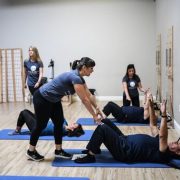
A group program such as Pilates can be especially helpful because it gives you a sense of accountability and camaraderie. In fact, our signature Pilates 101 program is relaunching in January, and we are so excited about it! Pilates 101: Get [Your] Back to Health is a one-of-a-kind 8-week program that delivers safe, yet highly effective Pilates-based core strengthening exercises that are easy on the joints, designed to lessen back pain, and help improve your flexibility and posture.

If you can track, schedule, or measure the steps of your goal, you’ll know when you’re making progress. If those steps happen alongside people who share similar goals and under the direction of a movement expert who can support you for two whole months — even better!

So, let’s finish off this decade strong — and don’t miss out on Pilates 101! These spots go fast, so apply now to make sure you don’t miss your chance.

How you actually CAN recover from chronic back pain

There’s nothing more discouraging than being in pain and feeling that there’s no way out of it. Back pain is such a common issue, and unfortunately, many people hold onto the mistaken belief that if you have a “bad back” you’re stuck with it for life. Not true!!

It is totally possible to recover from chronic back pain and return to the activities you used to love.

Great news, right? Let’s talk HOW. 

First of all, keep moving.

There are people in healthcare who will tell you to just avoid anything that irritates your back and accept that you can’t be as active as you once were. But what if basically everything triggers back pain? What if your job requires you to be on your feet or you simply want to tie your own shoes or pick up your grandkids? You don’t have to resign yourself to sedentary days spent popping ibuprofen every four hours and missing out on life. Don’t listen to the people who tell you to avoid movement — because in fact, the solution is the exact opposite. Consistent, correct movement heals your body and keeps it from shutting down. If you’re suffering from back pain, it may be a sign that your movement habits are off. You could benefit from working with a specialist physical therapist to retrain your body in how to move properly throughout your day, thus eliminating unnecessary stress on your spine.  

Along the same lines, make sure you educate yourself.

We offer a FREE workshop at our Portsmouth office every month to answer questions from our community, and our next topic is back pain and sciatica! You may feel like surgery and medication are the only options out there for recovery, but in reality they are just two of the less effective strategies for treating back pain. One of our clients, Sean, was dealing with multiple herniated discs and spoke with us on this exact topic. 

“I was considering back surgery until I found CJ Physical Therapy. I walked out of 

therapy with such relief that the thought of surgery was no longer an option. Therapy 

worked so much better than the steroid injection just a few months earlier, that it gave 

me hope of actually being able to feel like I did before the injury a year earlier.”

Nobody wants to get surgery, but if you haven’t been told about any noninvasive therapeutic routes to remedy your pain, surgery may seem like the only option. But time and time again, we have clients come to us with severe back pain and injuries that are often prescribed surgery — and time and time again, they have FULLY recovered through an individually customized program of physical therapy

If you’re dealing with chronic back pain, don’t be afraid to reach out.

We understand if you’re not yet ready to commit to PT — that’s why we offer FREE Discovery Sessions for potential clients. This 30 minute session is a chance for you to speak with one of our specialists and determine for yourself if we’re the best people to help you. It’s a completely free, no-obligation appointment that will give you all the information you need to make the BEST decision for YOUR health — whether that’s working with us or not! 

Physical Therapy and Pilates: The Perfect Pair

We all know the joke:

Patient: “When I go like this, my arm hurts.”

To which the doctor responds: “Well, don’t do that!”

With physical therapy, just “not moving” is never an option. Instead of telling the individual in this scenario to avoid the movement altogether, I would say, “let’s do it differently.”

People typically have muscle and skeletal pain because of one or more stressors occurring in joints or muscles.

When I treat a patient, I am often working to help them change the mechanics of their movement and therefore decrease or eliminate those stressors. It’s one of the main reasons why I incorporate Pilates into my treatments. It’s also why most of my patients will tell you that it is often difficult to tell where physical therapy leaves off and fitness exercises begin. And that’s precisely the way it should be.

Pilates teaches correct movement throughout the whole body. Each exercise is carefully designed to direct and reinforce the way in which a healthy musculoskeletal system should function. By practicing Pilates, you are strengthening your muscles correctly in a way that is conducive to all forms of exercise, as well as improving posture and balance. It’s a really great supplement to physical therapy because as you’re retraining or rehabilitating a specific part of your body, you have the opportunity to match that progress holistically.

Did you know that 90% of ALL musculoskeletal problems (aches, pains, and strains) can be resolved WITHOUT pain pills, procedures, or surgery?

So chances are, whether you’re suffering from sciatica, neck pain, an achy knee, herniated discs, or any number of physical issues, your pain can be resolved through physical therapy. And if you want to return to your daily activities even stronger than before — you can supplement your physical therapy sessions with Pilates.

Pilates-based physical therapy is excellent for people of any age who want to start an exercise program but might be afraid of injury or pain. Our practice actually specializes in treating clients aged 40+, and many of our clients in their 60s and 70s practice Pilates regularly! We offer a range of classes right out of our physical therapy practice in Portsmouth, which gives you the opportunity to combine your rehabilitation sessions with some therapeutic, strength building exercise for the whole body. Our group classes are geared towards beginners — no experience necessary! And if you’re interested, but don’t want to make a commitment, no worries. You can schedule a FREE Pilates Taster with us to see how Pilates can help you.

Want to find out if Pilates is something you should be incorporating into your physical therapy? Talk to one of our specialists for free! 

Why Rest Might Be the WORST Advice for Your Back Pain

The majority of the people who come through our doors are seeking relief from back pain. Unfortunately, many of them have been told -or have simply assumed- that the best way to recover from their pain is to ice and lie down – and use their back muscles as little as possible. They’ve been advised to rest, relax, and limit their movement until the pain goes away.

The problem with this model for treatment is that it goes against everything we know about the basic principles of joint and tissue healing. Our modern health research suggests that early movement is actually the BEST way to head off chronic back pain! Of course, if you’ve suffered a trauma like a car accident or a major fall, you should absolutely go get checked out by a medical professional and follow their advice based on your injuries. But if you are dealing with a chronically aching back or general soreness, stiffness, and pain, it turns out that movement is actually the best course of action!

Of course, not ALL types of movement and exercise are safe or beneficial when you’ve hurt your back…

That’s where physical therapy comes in! A physical therapist is able to identify specific movements that actually work through and relieve that pain, based on your individual condition. We call these initial exercises “first aid movements” – and they are especially helpful because you can use them any time you might tweak your back in the future! Knowing the specific movements that can help your back muscles relax and work fluidly with the rest of your body again can be a lifesaver if you work a physical job or rely on your ability to be active and mobile every day. And NOT knowing these movements can prolong your back injury and give it a better chance of coming back… often much sooner than you’d like.

If you’re experiencing acute back pain, of course it doesn’t make sense to continue with all of your activities as usual if they are just exacerbating your symptoms. But there is a middle ground between overdoing it and completely stopping the movement that your body craves. Talk to a physical therapist who specializes in back pain so they can help you figure out which movement is the safest and best for a quick and early recovery from back pain.

If you’re dealing with back pain right now and want to start learning how you can help yourself through movement (instead of pills) right away, check out our FREE report right here!

New Year — New You — New Pain?

New year, new you, right?

We’re officially in 2019 and it’s a brand new start… You’re excited, you’re motivated, and you’re on your way to achieving your goals for the year. But what happens when back pain hits you? Or your knee starts to hurt? Or your hip starts bothering you? The last thing you want is for your new routine to be disrupted and your progress halted…

So how do you know if the pain you’re experiencing is something to really worry about, or if it’s just a result of your body adjusting to a more active routine? (related: Where is your pain really coming from?)

These FOUR questions will help you clarify the type of pain you’re dealing with, help you figure out what to do about it, and most importantly – prevent “new pains” from getting in the way of your goals in the new year!

1. Does your pain come and go?

If the pain comes and goes, and starts to decrease the more you improve your fitness level, it’s probably just a sign that your body is getting used to your new activities. For example, if you’ve started doing squats for the first time and notice some knee pain when you first begin, you shouldn’t worry unless the pain gets progressively worse as you exercise.

Best practice: Keep an eye on this kind of pain – or download one of our FREE GUIDES – but there’s no urgent need to run to the doctor.

2. Does the pain last after the activity but go away the next day?

If your pain follows a pattern — e.g., your knee pain stays with you for the rest of the day after doing your squat sets but is gone when you wake up the next morning — means your body is trying to tell you something. This type of recurrent pattern is a warning sign that your body isn’t responding correctly to the exercise and could start to incur damage. If you’re experiencing a similar phenomenon, now is the time to make an appointment with a specialist physical therapist. Going to the doctor or orthopedic surgeon would be a less productive path to take, as they will likely send you down a rabbit hole of unnecessary tests and procedures (Do you really need an MRI?). But meeting with a physical therapist before the problem becomes too serious can help you adjust your movement and strengthen the right muscles so that you’re able to continue exercising as planned.

Best practice: Talk to a physical therapy specialist who can analyze your movement and the source of your pain.

3. Is the pain causing you to move differently?

People who ignore pain without seeing a physical therapist often end up here, which leads to a more difficult recovery. They often end up limping, walking “crooked,” modifying movements such as bending over, and moving stiffly. This is a result of your body compensating for the pain initially triggered by the exercise. Such compensations start to cause wear and tear on other areas, which only create more problems down the road.  If you’ve hit this phase – it’s still not too late to get some help.  Working directly with a physical therapy specialist will help you to quickly get rid of your pain and correct the compensations you’ve started to develop – so they don’t get worse.

Best practice: Make an appointment with a physical therapy specialist (at our office your first one is FREE)

4. Is your pain causing you to avoid or stop doing something?

When your pain is stopping you from doing something — whether that be doing squats, running, or picking things up off the floor— it’s a sign that your body is in distress and needs help from a physical therapy specialist, orthopedic specialist, or your doctor. However, I encourage people to seek out a physical therapist first. Traditional doctors typically don’t perform movement tests, relying solely on imaging and procedures to make diagnoses. They’re also more likely to prescribe rest, surgery, or painkillers  — despite the fact that 80-90% of ALL aches and pains can be resolved through corrective exercise and movement strategies administered by a movement expert (such as a specialist physical therapist). If the problem does require further intervention, then a physical therapist can refer you to the appropriate medical specialist.  Most states (including NH) don’t require a prescription to see a physical therapist. You can give us a call and come straight in!

Best practice: See if physical therapy can help FIRST by talking to a specialist and getting an evaluation

The moral of the story is, don’t wait to ask for help! You’re better off being extra-careful and addressing your pain early than waiting for it to become a full blown injury. If you are experiencing pain and/or need any help staying on track with your new movement program, don’t hesitate to reach out! You can also find us on Facebook and Instagram and learn more about our services here.

Happy New Year!

Setting Goals for the New Year: Part Two — Choosing a Long Term Goal

In the first part of this series, we focused on the precursor to goal setting — identifying a specific obstacle that’s getting in your way. The next step is determining a specific, measurable, long term goal.

One way to come up with a long term goal is by asking yourself, “where do I want to be a year from now?”

What do you want to be different about your life this time next year? If you identified an issue that is negatively affecting your life right now — such as chronic low back pain or being overweight — you can turn your desire to resolve that issue into a long term goal. For example, your goal could be to weigh 25 pounds less by December of 2019. Or maybe your knee has been bothering you for a few years, and your goal is to be able to go skiing again without pain. You could decide to run a 5k next Thanksgiving or simply want to be able to pick up your grandkids. The examples are endless, but the point is that it’s your goal. It’s specific to your desires and involves overcoming a specific obstacle in your life.

Setting a long term goal will provide a purposeful context for your day-to-day choices.

Once you’ve set a specific goal and shared it with your accountability team, you’ll be able to use it to guide your everyday actions. For example, eating healthy would have the purpose of helping you achieve your weight loss goal, as would participating in a Pilates class. Going to physical therapy would be helping you fix your body mechanics and relieve your back pain. In each example, the action in question (proper nutrition, Pilates, physical therapy) is undeniably good for you — but we rarely do things just because it’s objectively good for our bodies. We want to feel good, look good, and avoid pain. Having a specific long term goal will help you apply those healthy choices to a larger purpose and context — which will hopefully serve to motivate you as well.

Now, how do you stay focused?

The first step is writing your goal down on paper. Not in the notes on your phone, not just keeping a vague memory in your head — write it down. Then, post that paper somewhere you’ll see it every day. It could be your bathroom mirror, your bedroom door, your car dashboard — anywhere that forces the goal to become a part of your day. If you haven’t yet established an accountability team, read our post about gathering a group of trusted individuals (including your PT!) who can help you stay focused and motivated. Then, share your goal with them, and ask that they check up on you periodically to see how your progress is going. Finally, stay tuned for our next post in this series, where we’ll talk about breaking your long term goal into a set of smaller, more manageable short term goals.

In the meantime, check out our website and see how you can get a head start on a healthier New Year. We’re launching our signature Pilates 101 program next week and spots will fill fast, so sign up here to get on our early bird/pre-enrollment list! If you’re age 40+ and improving your core strength is part of your goal setting – then this program is perfect for you – especially if you’re also dealing with back pain.

If you have any questions about physical therapy, pilates, accountability, and/or goal setting, don’t hesitate to reach out or leave us a note on our Facebook page!

Setting Goals for the New Year: Part One – What to address FIRST?

New Year’s may still seem pretty far away, but if you plan on setting any resolutions or goals for 2019, you should start now. The earlier you set your goals, the more likely you are to achieve them. But choosing meaningful and positive goals is a process. That’s why we’re launching this four-part blog series to be your guide as we head into the end of 2018!

The first step is identifying what you want to change – FIRST.

A typical New Year’s resolution might be to lose weight or be more active. But before you can address those goals, it’s important to take a quick inventory of your body and identify obstacles that might get in the way.  The last thing you want is to get all excited about a goal, only to have those aspirations quickly deflated because you neglected to see the whole picture.

Let’s take the weight loss goal for example. Coming from a physical therapist’s point of view, that might mean asking yourself, “what hurts?” or “what has physically been bothering me?”  What are one or two things that could possibly get in your way of completing this goal?  Maybe your body is feeling great, you could still be struggling on other levels. It’s important to be honest with yourself and identify anything and everything that could be an obstacle to your goal. Once you can recognize and become aware of this issue, you have the opportunity to resolve it!

But how do you do that?  First, you have to get specific. For example, if you want to address your back pain in the New Year, so that you can be more active and lose weight in 2019, it’s not enough to simply say “I have a problem with back pain.”  When we get specific, we are able to take what may seem like a big, overwhelming problem – and turn it into bit size actionable chunks….

Start with focusing on the what, when, where, and why of the problem.

“Back pain” in itself is a general term. It’s more likely that instead of your entire back hurting at the same level all the time, you have a specific area (or areas) that hurts during specific activities. For instance, your “what” (the specific problem at hand) could be low back pain. The “when” could be in the evening after a long day on your feet. “Where” could be your living room when you’re trying to get up off the couch, or the golf course after a swing. “Why” could be a combination of factors that are causing you to experience the pain. For example, your body mechanics might be off to the point where it’s causing degradation of your vertebrae. Learning to move properly (for instance, with a physical therapist) would be a logical way to address that “why.”

Next, write down your focused description of the problem.

The simple act of writing something down will clarify and solidify your intentions. In this example, we started with the general statement “I have a problem with back pain.” We broke that down into parts, so that now you might say:

“I am experiencing severe low back pain. It typically occurs in the evenings after I’ve spent a long day on my feet, particularly when I’m moving from sitting to standing. This is likely a result of poor body mechanics, as I have never been instructed in proper movement to relieve back pain. This is the issue I intend to resolve so that I can be more active in 2019 and lose 20 lbs.”

Our next blog post will consider this series and discuss how to set a specific long term goal.

Stay tuned for this post coming out on 11/20! In the meantime, you may want to consider how physical therapy could help you in improving your overall health this upcoming New Year. You may not have a specific physical complaint like the one we described in this post, but working with a physical therapist can actually help you PREVENT these issues from arising later on! As we continue to age, it becomes more likely that we will experience back pain and numerous other issues. The great thing about PT is that it strengthens your body in all the right ways to guard against joint degeneration, stiffness, achiness, muscular weakness, and loss of balance (just to name a few benefits).

If you want to know if one of our specialists can help you, apply for one of our FREE Discovery Visits right here in Portsmouth!


Physical therapy WORKS – Take it From the Ones Who’ve Done it!

Still not sure about PT? Have you heard a lot of conflicting information about what we really do as physical therapists? Do you need relief from an injury or chronic pain but you’ve been told surgery is your only option?

You’re not alone.

So many of our clients have come through our doors for the first time with those same questions. They may have been told over and over again by doctors that their pain or injury isn’t fixable – or if it is, they need extensive surgery and/or drugs. Many have never tried physical therapy before. Some are nervous because they think that it will be painful, and others doubtful that they’re going to learn anything new or helpful. But time and time again, those same individuals end up seeing amazing improvements in strength, mobility, health, and lifestyle. They consistently report how grateful they are to be simply living pain-free or able to participate in their favorite activities again. And we are always so proud of them for putting in the work and being an active participant in their individualized treatment plan!

I could go on and on about the results our awesome clients have seen, but no one says it better than themselves.

When Jeff first came to us he had a shoulder problem that was keeping him from working out at the gym the way he wanted. He’s also a dentist so leaning over his patients all day wasn’t helping. We worked on strategies during the day to help his mobility and then we tackled his stability! He came in and let us know that he was back to his full chest workout and pushups – with zero pain!

David, age 56, suffered from chronic neck and shoulder pain before coming to us for help.

“I couldn’t run more than 2 miles without radiating neck and shoulder pain and I was really uncomfortable at work. Working with CJ Physical Therapy, I learned how to manage my neck without going the surgery route. Now I can run as far as I like without any neck or shoulder pain.”

Another 56 year old, Kathie, took advantage of both our physical therapy and Pilates programs to resolve her shoulder pain.

“Before coming to CJPT & Pilates I was dealing with a shoulder problem that kept me from things like buckling my seat belt, walking the dog, and putting dishes away. I wanted to try something different from the traditional routes I’d tried in the past. Combining physical therapy and Pilates, and working with someone who understood my personal needs, was the difference that gave me my life back.”

Gale, age 65, experienced a positive difference with our practice that she hadn’t received in the physical therapy that was referred to her following a surgery.

“I was dealing with terrible pain and numbness in my arm and wrist after surgery, and there was still no relief after 15 weeks of regular physical therapy. After coming to therapy here, I can now cook, put on make-up, and I’m no longer worried about getting back to hiking or backpacking which I love. Best experience ever!”

Nothing makes us happier than getting to be a part of a positive change in someone’s life. And we love to hear how PT has impacted not just our clients’ health, but their lives overall! Several of our clients have even shared video testimonials of their experience working with us, which can be found here. They are living proof that anyone can benefit from physical therapy. You can be as skeptical as you want – you just have to be willing to give PT an honest shot. And chances are, you’ll be glad you did!

If you’re wondering if physical therapy is right for you – or if a different kind of physical therapy is right for you – please reach out!  We are so happy to help.  If we can’t help you – we’ll find someone that can.