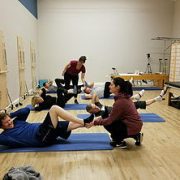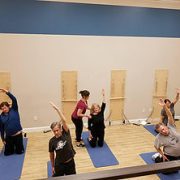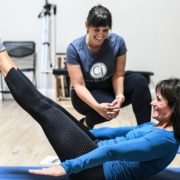

Why New Year’s Fitness Goals Backfire — And How to Protect Your Back
Why New Year’s Fitness Goals Backfire — And How to Protect Your Back
Every January, it happens like clockwork.
Gyms fill up. Fitness challenges kick off. People recommit to moving more, getting stronger, and finally prioritizing their health. And honestly — that motivation is a great thing.
But then February and March arrive… and we start seeing a different pattern here at our physical therapy clinic in Portsmouth, NH.
Back pain flares up. Old injuries resurface. New aches suddenly derail workout routines. And many people quietly decide they’re “too old,” or that certain exercises “just aren’t for them.”
In reality, the issue usually isn’t motivation or effort. More often, unresolved or low-grade back pain quietly follows people into their New Year’s fitness routines — and when increased intensity, load, or frequency is layered on top of poor movement patterns, even the best intentions can backfire.
If your goal this year is to stay active and pain-free, the solution may not be doing more — but doing things smarter.
Why January Is a High-Risk Month for Back Injuries
January is one of the highest-risk months of the year for back injuries — and that’s no coincidence.
Back pain rarely appears out of nowhere, even when it feels sudden. In most cases, it develops gradually over months or even years due to prolonged sitting, repetitive bending or twisting, and subtle compensations the body makes without you realizing it.
The holiday season often magnifies these stressors:
- Long car rides and travel
- More time sitting on soft couches
- Disrupted routines and less daily movement
By the time January arrives, many people are already showing early warning signs of a brewing back pain episode — stiffness, mild aches, or irritation.
Then comes the abrupt shift:
New workouts. Heavier lifting. High-intensity classes. Aggressive stretching. Movements the body hasn’t been prepared to tolerate.
This combination is why so many people start the year strong — only to find themselves sidelined weeks later with back pain or sciatica.
Exercise Is Medicine — But Only When the Dose Is Right
Exercise is one of the most powerful tools we have for preventing and resolving back pain — when the dose is appropriate.
When your back is healthy, general exercise and strength training can be excellent preventive tools. But when back pain is already present, a more specific and individualized approach is often needed.
Roughly 80% of back pain is mechanical in nature, meaning it comes from how your body moves, sits, bends, lifts, and responds to load — not simply from structural issues like arthritis or disc degeneration. In fact, research consistently shows that many people with disc bulges or degeneration have no pain at all.
When faulty movement patterns and underlying spine mechanics aren’t addressed first, working harder in the gym can unintentionally amplify the habits that caused the problem in the first place. This is a major reason New Year’s fitness routines fail — despite great intentions.
How to Pursue Fitness Goals in a Back-Friendly Way
The good news? You don’t have to choose between staying active and protecting your back.
A few simple strategies can dramatically reduce injury risk while supporting long-term fitness.
1. Reduce Prolonged Sitting
Sitting increases compressive forces on the spine by up to 40%. Spending most of the day seated and then jumping into intense workouts puts your back at a disadvantage before exercise even begins.
Breaking up sitting time every 30 minutes with brief movement or posture changes gives your spine a break and creates a healthier foundation for exercise.
2. Don’t Underestimate Walking
Walking restores natural spinal movement, improves circulation, and reduces hip stiffness — a common contributor to back pain.
Aiming for 6,000–7,000 steps per day (about 45–60 minutes spread throughout the day) supports spinal health, joint mobility, and cardiovascular fitness without overwhelming your system. If walking consistently worsens your back pain, that’s a sign to seek expert guidance — not to stop moving altogether.
3. Focus on Postural Variety, Not “Perfect Posture”
No posture is healthy if it’s held too long. The spine thrives on movement and variability.
Rather than chasing perfect posture, focus on changing positions often while maintaining general postural awareness.
4. Strengthen Your Core — Intelligently
Core strength is important, but it’s not always the fix for back pain people expect. Because back pain is often sensitive to position and load, generalized core exercises can sometimes make symptoms worse.
Targeted, well-coached strength training and functional movements — guided by a back-aware professional — help build stability at the right time and in the right way.
5. Don’t Wait for Back Pain to “Go Away”
Mechanical back pain rarely resolves with time alone. It adapts, compensates, and quietly becomes limiting.
The absence of pain doesn’t always mean the absence of a problem. Understanding why your back hurts — and which movements help or worsen symptoms — is far more effective than relying on short-term fixes.
Work Smarter, Not Harder This Year
A successful New Year’s fitness plan isn’t defined by how hard you push in January.
It’s defined by how consistently you can move throughout the year — and whether you can keep doing the activities you love without setbacks.
With the right approach, movement becomes the solution — not the reason you’re sidelined.
Dr. Carrie Jose, Physical Therapy Specialist and Mechanical Pain Expert, owns CJ Physical Therapy & Pilates in Portsmouth, NH, and writes for the Seacoast Media Group.
To get in touch — or request a free discovery visit with one of our specialists — visit our website or call 603-380-7902.