Tag Archive for: physical therapist

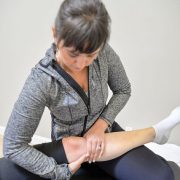
Noticing More Knee Pain during Quarantine?

Aside from back pain, the second most common complaint bringing people into our office these days is knee pain, and lately, I’ve seen a little surge.

Here’s why…

People are sitting a lot more, which leads to increased stiffness in your knees. And a lot of us are doing different kinds of activities than we did 6 weeks ago, which for some, is exposing knee problems they never knew they had.

I spoke to one gentleman last week (we’ll call him “Jack”) who had started walking every day, and running a little bit, because his gym had closed. After about 4 weeks of this, he began experiencing pain in the front of his knee. He put some ice on it, took a break from his daily walks and running, and also resumed some stretches that a former physical therapist had told him to do. This seemed to help, so he resumed his walks and running again. Three days into it… bam… his knee pain returned.

Our specialist team has opened up our schedules to answer people’s questions about what they can do at home right now to take care of any aches or pains.

So Jack took us up on that, because he wanted to know if his knee pain was something to worry about. Did he need to see a doctor? Did he need to let it rest some more? Were there specific exercises he could do?

He did NOT want to stop his walking and running routine, but he definitely didn’t want his knee to get so bad that it would keep him from returning to the gym when it opened back up. He’s 55 years old and staying active and mobile is VERY important to him. We spoke for about 20 minutes and I knew immediately that rest wasn’t going to work, and that X-rays or medication from a doctor wouldn’t do anything either. Those things would only mask the problem. They would take care of the pain in his knee – but wouldn’t correct the source of his problem.

Ironically, the truth about knee problems is that they’re often not actually knee problems!  

With most knee pain, we can trace the underlying issues to a locality directly below the knee (the ankle or foot) or directly above it (the pelvis, hips, core, and low back). If you don’t engage your core throughout your daily movement, it actually puts a huge amount of strain on your knees. As your legs swing and rotate, the torque that should be occurring through your pelvis and hips gets overloaded onto your knees. So as we age, we may start feeling a sense of wear and tear or weakness in our knees that actually comes from a lifetime of improper movement.

The mainstream medical model is focused largely on treating symptoms rather than identifying the root cause of WHY the problem is occuring in the first place.

Pain pills, injections, and even surgery are often recommended before more conservative and natural treatments! And because these quick fixes are merely addressing the symptoms, the physical problems return for the majority of affected individuals. That’s because those knee issues actually stemmed from a different part of the body, and the knee will continue to be overloaded until those biomechanical problems are addressed directly!

Yes – we were able to figure ALL of this out from a FREE phone session.

The next step for Jack was an evaluation with our knee specialist. We scheduled a virtual session over Zoom, she was able to confirm the source of the problem. Turns out the muscles in his hips weren’t firing like they should and it was causing his knees to compensate and work harder than they needed to, which resulted in pain. So we got him doing the correct stretches and specific exercises that would train his hip and pelvis to work like they are supposed to.

In no time, Jack will be back to his walking and running routine, but he will ALSO be in better shape to return to the gym. One of his frustrations before was not being able to do as many squats as he wanted – because they hurt his knees. He had no idea that the problem was actually coming from his hips! So he is pretty excited to try his squats again once his gym opens back up.

If Jack’s story sounds familiar to you, schedule a call with us.

There is no point in sitting at home worrying, or scouring Google for what you should do to fix your pain. We can figure out what’s going on with you over the phone and I’ll let you know if you need to schedule a session with us, see a doctor, or if it’s something you can take care of on your own.

Is Quarantine Turning Into a (Literal) Pain in Your Butt?

We are about 5 weeks into social distancing and doing our best to flatten the curve. Although we are all coming together as a country to do our moral duty and fight the spread of Covid-19, it doesn’t come without consequences.

More screen time and more couch time are wreaking havoc on our bodies.

Most people I speak with are making a concerted effort to be as active as they can during the day. But even the best efforts are not combatting the extra bending and sitting that is happening. It’s almost impossible to avoid it. Due to social distancing and more people working from home than ever before, our primary way of “gathering,” seeing loved ones, and communicating with co-workers is now totally digital.

Whether we like it or not, we are hunched over and leaning forward more than ever — and it’s becoming a pain in the butt, quite literally.

In our last blog post I talked about the difference between “good pain” and “bad pain.” Since then, I’ve spoken to many of you over the phone about your concerns. One of the most common questions that came across this week was about pain in your butt, and not the figurative kind!

Yes, too much sitting can cause pain in your butt, but not for the reasons you might think…

One person I spoke with thought it might be due to the hard kitchen chair he was sitting on. Makes sense, right? But when he added a cushion, and then tried moving to the recliner to do his work and online social gatherings, the pain in his butt got worse.

So he did what most of us do, and went straight to Google.

He thought that maybe he had “piriformis syndrome” and started doing the recommended stretches. The pain in his butt started to subside a little, but then spread to the back of his thigh. He thought the pain in his thigh might be due to the stretches and that it was a good thing. But after about a week of this, he woke up one morning unable to move his back! That is when he called me.

I explained that the pain in his butt was NOT due to piriformis syndrome like “Dr. Google” told him. It was actually coming from his lower back. All the extra sitting was putting pressure on his disc, which was putting pressure on his nerve, and the result was pain in his butt. Without realizing the true cause of his problem, he accidentally started doing stretches that made his problem worse. It’s very common to have a back problem and not experience any back pain. Back problems can manifest in your butt, thigh, or lower leg, and very often get confused with tight muscles that just need to be stretched. If you do the wrong stretches, you will make your problems worse and you WILL end up with back pain – often severe and seemingly out of nowhere.

Luckily, we were able to hop on a Zoom session and give him the correct stretches to do. Within a few weeks, he no longer had pain in his butt, and he knew what to do to keep it from coming back.

If quarantining is giving you a (literal) pain in your butt right now, don’t rely on Google to figure out your pain — talk to us!

We’ve been opening up extra slots on our schedules just to talk to people and help them figure out anything new or strange that might be going on.

All you have to do is fill out this quick form to request a call with one of our specialists.

How to Tell Good Pain from Bad Pain

Over the last few weeks, we’ve been inundated with people asking for help.  And we’re so thankful for everyone who is reaching out! 

Since being quarantined at home and off their routines, people are noticing more knee pain and back pain (these are the two biggies) because they are either sitting more — or because they are DOING more.

The folks who have been sitting more have been complaining about more back pain and stiffness, tightness in their hip flexors and knees, and more tension in their necks.

However, the people who have been doing more are noticing increased or NEW aches and pains in their knees, muscles, and joints – and are wondering if this is “normal” or if it’s something to be concerned about.

For some, the aches and pains are quite harmless – and it’s easy enough to stretch out on your own at home. If you’ve been more active lately because you’ve been bored or suddenly have more time, these could be symptoms of “good” pain. It’s not unusual to have more soreness in your muscles and joints with increased activity or exercise.

But for others – these symptoms could be a sign of an underlying problem that was already there – and just now surfacing. And if that’s the case – simple home stretches that you look up online are not going to be enough – and could actually make you worse.

So how do you know?

One way is to look at how your pain behaves. Does it get worse? Or does it get worse, but not until later? Does your pain move around? Or does it come and go? Does it get better and STAY better the more you stretch? Or does the stretch only provide temporary relief — like a bandaid — and your pain just keeps coming back?

Understanding how your pain behaves is how you know whether or not you’re doing the right thing or the wrong thing.

And how your pain behaves is not as simple as “getting better” or “getting worse.” 

There is so much grey area when it comes to pain, and it’s where people get really confused.

For example, pain might seem like it’s going away, but then it comes back again. Does that mean you’re better? Or is the problem still there? Sometimes pain will move, and you think it’s a sign of improvement. We see this all the time with back problems. Pain starts in your back and is really painful, but then it moves to your butt, hip, or thigh and is more achy and not as sharp. You think you’re getting better — but most of the time this means your back problem is actually getting worse!

The truth is, you’ve got a 50% chance of getting it right and a 50% chance of getting it wrong. And if you fall on the side of getting it wrong, it can lead to a lot more problems down the line that you won’t be able to fix on your own from home.

The BEST way to figure out if your pain is normal — or if it’s something more — is to talk to an expert.

That’s what we’ve been doing ALL month here. As specialized physical therapists, we have been getting on the phone — or hopping on Zoom — to help you figure out what’s going on in your back, knees, or somewhere else.

It’s totally free to talk to us! We’ll let you know if what you’re experiencing is normal… and if what you’re doing is safe or not.

If you want to get on our schedule — and talk to one of us for free — just fill out this form.

You can talk to us in-person if you’re comfortable leaving your home, or virtually if you’re nervous about leaving. Both methods are equally as effective!

Whatever you do, don’t try to figure out your pain on your own — and don’t just throw pills, ice, or heat at it. This could lead to more problems down the line. Plus, if you let it get bad enough, you may be forced to go to Urgent Care or the ER — two places you DON’T want to be right now.

Instead, get on top of your pain and learn how to treat it properly so that you can be healthy and pain-free for the rest of quarantine! 


Back Pain Doesn’t Go Away for the Coronavirus!

The coronavirus (COVID-19) is forcing everyone to adapt to new routines — but many of us are still experiencing the same old chronic pain. In fact, your back pain may start acting up again now due to stress, decreased exercise, and more time spent at home on your computer. The important thing is that you don’t ignore it! Listen to your body and KEEP MOVING!  

Prior to seeing us, many of our clients who suffer from back pain were told that the best way to recover was to ice and lie down. They were advised to rest, relax, and limit their movement until the pain goes away. The problem with this model for treatment is that it goes against everything we know about the basic principles of joint and tissue healing.

Our modern health research suggests that early movement is actually the BEST way to head off chronic back pain!

Of course, if you’ve suffered a trauma like a car accident or a major fall, you should absolutely go get checked out by a medical professional and follow their advice based on your injuries. But if you are dealing with a chronically aching back or general soreness, stiffness, and pain, it turns out that movement is actually the best course of action!

But not ALL types of movement and exercise are safe or beneficial when you’ve hurt your back…

That’s where physical therapy comes in! A physical therapist is able to identify specific movements that actually work through and relieve that pain, based on your individual condition. We call these initial exercises “first aid movements” – and they are especially helpful because you can use them any time you might tweak your back in the future! If you’re experiencing acute back pain, of course it doesn’t make sense to continue with all of your activities as usual if they are just exacerbating your symptoms. But there is a middle ground between overdoing it and completely stopping the movement that your body craves. 

But how are we supposed to see a physical therapist, you ask, when everything is shutting down to contain this coronavirus? 

Is Pilates the missing link in your fitness?

Pilates has been around for about 100 years, and it still amazes me how many people have NOT heard of this incredible exercise method.

It was first created by Joseph Pilates and initially gained popularity among the dance community as a way to recover from and prevent injuries. But you don’t have to be a dancer to practice Pilates — or enjoy the benefits.

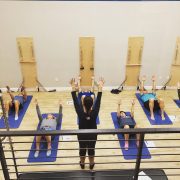
I’ve been incorporating Pilates into my physical therapy practice for the last 10 years and it’s been transformational for both my clients AND my practice. Every March, we join participants from all across the globe to share the love for the original work of Joseph Pilates. Over the years, much of Pilates has turned contemporary, but for one month – the Pilates community pays respect to his traditional, classical Mat exercises. This movement is known as March MATness, and anyone can join!

Pilates is a full body strengthening system that emphasizes breath, precision, coordination, and core strength — and it helps my clients connect to their bodies in a way that they haven’t been able to achieve with traditional strengthening methods.

Most of my clients are well into their 50’s and 60’s, and they love Pilates because it helps them have more energy, better balance, and improved strength and mobility. It allows them to participate in all the activities they love with more ease, and most importantly, significantly decreases the likelihood that their injury will come back.

Here are five reasons why Pilates was a missing link in my physical therapy practice, and why it might be the missing link to YOUR life-long fitness as well.

1. Pilates helps prevent back pain.

Once you hit 40, your risk of back injury starts to climb. We see a lot of folks with recurring back pain in our office. They’ve seen traditional physical therapists or chiropractors who get rid of their pain in the short term, but they aren’t able to keep it gone. Regular practice of Pilates is a safe and sustainable way to help keep your back pain-free. It focuses on core strength but also is a well-balanced exercise system — so it keeps your back feeling mobile in all directions — a missing link in most “back strengthening programs.”

2. Pilates strengthens your whole body, not just your core.

One of the keys to lifelong fitness is what I call “balanced strength.” That’s when each part of your body works together to produce the right amount of force, at the right time, to do your favorite activity in the most efficient way possible. Efficiency means you’ll be able to do it for a lot longer. I see lots of strong people in my office, but often certain muscles are working harder than others. And this can cause problems down the line. Pilates emphasizes full body strength that is coordinated — and this leads to a balanced body.

3. Pilates helps you get flexibility the right way.

Do you stretch your hamstrings every single day and find they just never get more flexible? It’s probably because you’re not stretching the right way — or maybe you don’t even need to be stretching them at all! What I love about Pilates is that it stretches your body in a dynamic way — with movement — so that muscles lengthen the right way and where they are supposed to. “Mobility before stability” is a phrase you will hear me say often, and it’s one of the keys to lifelong fitness.

4. Pilates puts very little stress on your joints.

Aging is a real thing and along with it comes arthritis. But it’s not a death sentence like most people are led to believe! The key to combating arthritis is maintaining a mobile and well balanced joint. When you optimize everything that surrounds your arthritic joints, your symptoms decrease. Pilates helps with all this and doesn’t cause any added stress. When your joints are happier, it becomes much easier to do your favorite activities – hopefully for life!

5. Pilates trains your nervous system.

Huh? Is that even a thing? Yes it is — and it’s almost ALWAYS a missing link that I see for people who’ve been at a certain activity for a really long time and then suddenly things start breaking down. They start experiencing pain when they never have before. If you don’t train your nervous system, it gets lazy, and that is how compensations develop in your body. Pilates helps with this because it is a mind-body exercise that emphasizes balanced strength and coordination. Your nervous system can’t get lazy when you do Pilates!

If you’re not yet incorporating Pilates into your fitness or rehab routine — what are you waiting for?

Check out our Pilates 101 Get [Your] Back to Health Program. This is our one-of-a-kind 8-session program that delivers safe, yet highly effective Pilates-based core strengthening exercises that are easy on the joints, and help improve your flexibility and posture. Apply here!

Persistent neck pain and tired of not getting answers?

Have you been dealing with annoying, on and off neck pain for a while now? Have you tried treating shoulder pain with no real results? Are you frustrated with empty answers?

Or maybe you know someone else who is dealing with this?

Over 30% of people report they have neck pain. Of those, 50% will continue to have problems without any real answers or solutions.

When clients come to us with neck pain, often they’ve already tried several approaches without success. But the real issue I see is that everyone they’ve seen up to that point has failed to give them a full and accurate diagnosis.

Without an accurate diagnosis, treatment fails.

It’s not surprising. The true cause (or causes) of neck pain can be easily missed by many, and is sometimes difficult to diagnose.

Why?

There are a few reasons…

  1. The anatomy of your neck, unlike the rest of your spine, is fairly intricate. Not only does this require special care and accuracy when it comes to examining your neck, it makes it easy for someone who is not expertly trained to miss things.
  2. Shoulder pain is very often confused with neck pain. What I mean is, it’s possible to only feel pain in your shoulder, but the real source of the problem is your neck. If you’ve ever been treated for a “shoulder problem” and it hasn’t gotten any better (or maybe it got worse!), there’s a good chance you were misdiagnosed.
  3. Your core strength has a lot to do with how well your neck functions. When it comes to neck pain – or any problem for that matter – a holistic approach is always best and the most thorough. Sometimes your neck pain can be a “symptom” of a root cause somewhere else. Many times I’ve seen people come in having suffered from neck pain for years – and once we properly strengthen their core or other areas of their body – their neck pain starts to finally improve.

These are just a few of the most common reasons I’ve seen, over the years, of why the true source of your neck pain can get missed. And guess what… if the true cause of your pain is missed… then you won’t get consistent relief or a full recovery.

Check out our free neck report here or request a time to speak with one of our specialists here.

What is Dry Needling?

At CJ Physical Therapy and Pilates, our goal is to help you live a pain-free life without pain pills or invasive procedures.

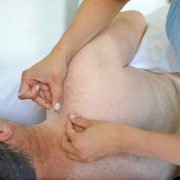
Trigger Point Dry Needling is one of several strategies we use to treat muscles that are extremely tense and in spasm. The spasm causes the muscle to be in constant tension which reduces blood flow, decreases oxygen, and can produce fibrotic unhealthy tissue over time (scarring). When a physical therapist inserts the very thin acupuncture needle (dry needle) into a knotted up muscle, it creates a local twitch reflex. Research shows that this not only relaxes the muscle, it breaks up the pain cycle by improving blood flow and oxygen to the muscle. This whole process helps to reduce and normalize inflammation in the area to promote healing. However, dry needling is not necessary for everyone, so it’s important that you know what it is and when it can be used to improve your health! Here’s our advice when it comes to pursuing dry needling treatment.

Work with a physical therapist to use dry needling in conjunction with movement based rehabilitation.

Dry needling can work wonders to relax your muscles. However, they’re just going to get tense and damaged again if you don’t learn how to use them properly and address any movement dysfunction that may be occurring. You don’t want to think of it as a quick fix! Dry needling is just the first step for some individuals who aren’t able to begin a physical therapy or movement regimen without first breaking up the pain cycles in the muscles that are prohibiting healthy movement. Dry needling serves as a “helper” to relax those muscles – and should be integrated with physical therapy treatment and strengthening activities such as Pilates.

Don’t be afraid of trying dry needling!

It can be uncomfortable for some people, but others say they feel no pain at all. It’s not dangerous and has lasting positive effects when used in conjunction with hands-on physical therapy under the direction of a specialist. Furthermore, our clients love it:

“After two back surgeries in my 20s and a new hip at 58, I figured I was lucky just to be walking. Dry needling has transformed the way I move. I’m more flexible. My walking stride has more length and I can stand longer.” – John

Do you have questions about dry needling? Want to see what a specialty physical therapy practice can do for you? We offer FREE Discovery Sessions right here in Portsmouth that give you the opportunity to ask any questions you may have! It’s a completely free, no-obligation appointment that will give you all the information you need to make the BEST decision for YOUR health. All you have to do is fill out this quick form, and we’ll be in touch!

5 Reasons People over 40 should do Pilates

Pilates is good for anyone and everyone… but especially for middle aged and older adults. Here are just some of the reasons to take Pilates classes if you’re in your 40s, 50s, 60s and beyond!

1. Relieve -and prevent- back pain

Many people who come to us with back pain think that their pain would prevent them from participating in an exercise program like Pilates – but the truth is, it’s the opposite! Guided, individualized Pilates combined with a physical therapy regimen is actually one of the best things you could do for your back. Pilates strengthens your entire body, starting from your core, which naturally prevents future back issues stemming from muscular weakness or imbalance. Furthermore, Pilates (combined with PT) teaches correct movement – which is the number one way to relieve any current pain!

2. Increase balance

Since Pilates is all about core strength, it makes sense that continued practice can improve your balance by leaps and bounds! This is an especially important benefit for the older adults who do Pilates with us. As we age, our balance unfortunately deteriorates. However, those changes are not irreversible! Pilates retrains the balance and strength that makes falls less likely.

3. Improve flexibility

You don’t have to be flexible to start Pilates, but you will see your range of motion improve drastically after consistent practice! Improving flexibility is especially important as we age. The founder of the Pilates system himself, Joseph Pilates, once said,

 “if your spine is inflexibly stiff at 30, you are old; if it is completely flexible at 60, you are young.”

The years you’ve spent on earth is just a number… but it’s the condition of your body that dictates your age – not the other way around! And flexibility is the cornerstone to musculoskeletal health and resilience.

4. Reduce stress

We know that exercise in general is a great stress reliever, but Pilates is especially beneficial because it focuses on literally releasing that stress from your body through guided, intentional movement. Plus, having a regular Pilates class to attend can be a consistent fixture in your life that can serve as an outlet for all your day to day stresses!

5. Improve physique

“In 10 sessions you’ll feel the difference, in 20 sessions you’ll see a difference, and in 30 sessions you’ll have a whole new body.”

That’s another great quote from Joseph Pilates! Pilates is one of the best full body workouts out there, and it’s super effective for improving muscle tone overall and shedding excess body fat. If you practice Pilates regularly, you’ll continue to gain strength overall, which will improve your ability and performance in any other physical activity you enjoy!

Happy Halloween! Spooky Noises coming from your Knees?

“What are those cracks and noises coming from my knees? Is there something wrong??”

Our clients come in with this question all the time. They usually feel nervous and fearful that the noises they hear may indicate something more serious is going on within the joint. Is there damage occurring whenever they hear this sound? Do they need to avoid activities that provoke these symptoms? Will they need to rely on pain pills and surgeries in order to maintain their mobility if their joints deteriorate? 

Crepitus refers to these clicking, popping, and creaking sounds that a large portion of the population experience on a regular basis.  This phenomenon can occur at any joint, but is most commonly reported in the knees, shoulders, ankles, hips, and spine. 

Although these noises often don’t produce any pain, they can cause anxiety. Individuals start to develop their own beliefs about what is going on, and ultimately alter their behavior to avoid these cracking or popping sensations.

What causes these noises?

Many structural factors can contribute to joint noises.  Some of the most common are:

  • Tendons rubbing along bony prominences (bumps on bones)
  • Nitrogen bubbles popping due to pressure changes within the joint
  • Small labral or meniscus tears that get caught or pinched as we move

However, we don’t have the luxury of utilizing x-ray goggles during our examinations.  This means that we often cannot be certain of exactly which structures are creating these sounds.  What we do know is they aren’t a reason to be highly concerned as long as they aren’t associated with pain or swelling in the affected joint.  

How can I prevent it from getting worse?

The best way  to prevent these symptoms is to keep moving!! Motion is lotion. Regular movement throughout the day allows our joints to lubricate themselves, kind of like applying WD-40 to a creaky door hinge.  Additionally, it’s important to keep the muscles surrounding your knees strong and balanced. This helps to offload the forces through the joint, which limits “typical” wear and tear on cartilage and bony structures.

What if I’m noticing pain or inflammation in the joint that’s making these noises?

If you have a specifically noisy joint that’s also painful or swollen, it’s best to come in for a formal examination with a physical therapist – ideally someone who specializes in movement mechanics.  We train you in correct, healthy movement that both relieves your body of pain in the short term and protects it from further damage in the long term.

If finding the solution to your problem is something you’re interested in, you can come in for a free Discovery Session at our practice in Portsmouth, NH! All you have to do is fill out this brief form here and we’ll contact you. Discovery Sessions are great for people who want to talk with a specialist about what might be causing their problem, and we’ll help you figure out what the next best steps are.  Our goal is to give you all the information you need so that you can make the best decision for your health – without any obligation or commitment.

We also know not everyone is ready to commit to regular physical therapy appointments, and that’s why we offer free health and posture classes!  These events are for people in our community who want really valuable, expert information about movement, pain, and overall wellness. We know it’s confusing out there with all of the information floating around on Google and Facebook, and this is a valuable first step towards getting some answers for your problem.

Hopefully you found this information helpful, and the only thing scaring you this Halloween will be haunted houses instead of the noises coming from your joints!

PS – If you found this information helpful, please share this with a friend or on your Facebook feed.

Knee pain? Top three causes and what to do about it.

Knee pain is one of the most common complaints that brings people into our office.

Since most of our clients are in their 40’s, 50’s and 60’s, they start to really worry that knee pain could bring an end to their active lifestyle. But that doesn’t have to be the case! The good news is that unless you’ve had some serious trauma (like a major accident or fall), 80% of all knee problems can be resolved without any kind of procedure or surgery – and most importantly – you can learn how to continue managing them on your own so that they never get in the way of your favorite activities again.

Sound too good to be true?

It’s not – I promise – but the first step is figuring out where your knee pain is coming from. Once you know that, you can get on the right path to resolve it.

Here are three of the most common causes I see that make people suffer from knee pain and what you can do about them:

1. Iliotibial band syndrome

This is a very common problem that typically affects runners, avid walkers, and hikers. It is often misdiagnosed and confused with patellofemoral syndrome (see below). Your iliotibial band (IT band) is a very large thick band on the side of your knee that will often get overworked due to a muscular imbalance elsewhere in your body (usually your hips and core). When this happens, you’ll feel pain that is on the side of your knee that is usually very sore and tender to touch, and typically sharp and stabbing versus achy. It will impact you most when you’re going downhill or down the stairs.

It’s important to note that even though a tight, and painful IT band is the structure causing you to have pain – it is typically a symptom of an underlying problem. Like I said before, IT band problems are usually the result of your core and hips not stabilizing your pelvis properly – which ultimately results in your knee not receiving the support it needs when you’re running, walking, or hiking.

Getting rid of the actual pain is the easy part… in our office we use things like dry needling, soft tissue work, and sometimes even some taping. But if you want to keep the pain gone – you MUST address the underlying causes as well. This is what a lot of people miss. We love using Pilates-based exercises in our office because they not only target your core, but also get your muscles working in a coordinated, symmetrical fashion, helping to keep things balanced as you get back to your favorite activities.

2. Patellofemoral Knee syndrome

This problem is very similar to IT band syndrome, with just a few key differences. This first is that it can impact almost anyone – not just runners, hikers, and walkers. You’ll also experience the pain in the front of your knee – typically under your kneecap – and it will tend to be more achy than sharp. This problem will often come on very slowly and can be more chronic than its IT band cousin. You’ll feel this more when you’re going up stairs, up hills, and with squatting. You’ll also notice stiffness and pain in the front of your knee after sitting awhile – that usually will go away once you start moving.

Much like IT band syndrome – these are all symptoms of an underlying cause. A weak core and hips can cause this problem too, but I usually see more weaknesses in glutes and hamstrings with this one. When the backs of your hips and legs aren’t kicking in like they should, it can result in tight hip flexors or quads. This is a super common culprit for patellofemoral syndrome. So once again, you can get rid of the pain quite easily in most cases, but you must make sure to determine – and address – the root cause so that you can keep this pain gone for good.

3. Osteoarthritis

Many people hear that they have osteoarthritis in their knee and think there isn’t anything they can do about it. Not true!! Arthritis is often blamed for knee problems but it isn’t always the cause of what you’re feeling… Let me explain….

When arthritis is the true cause and culprit for your knee problem, it will be painful and stiff all the time. You’ll lack significant mobility and it will be almost impossible to walk and bear weight without support or a cane. When this is truly your problem – you are a great candidate for total knee replacement surgery. Now here’s the catch… sometimes your X-ray or MRI will show that you have terrible arthritis or that you have “bone-on-bone”… but that doesn’t mean you need to rush to surgery! Your symptoms should really decide that.

If your pain comes and goes (meaning you have good days and bad days), if you can walk around most days and go up and down the stairs and your knee just “catches”, or maybe you feel stiff a lot but this eases up with movement – you might have arthritis in your knee but it is not the root cause of your knee problem. Because here’s a hint – arthritis does NOT come and go – but other common musculoskeletal problems can. When your pain comes and goes, you know it can’t be entirely from arthritis.

So what should you do?

With arthritis, whether it’s partially to blame, or whether it’s just something that shows up on the X-ray and gets blamed… we still need to look at the surrounding structures and root cause of the problem.

If your quads are really tight, and the muscles around your knee are imbalanced, this can create compressive forces in your knee joint which will exacerbate what might normally just be “mild” arthritis (compression will aggravate arthritis). You could also have weakness or problems in your ankles, feet, or core that are causing your knee to work harder than it needs to. This can cause pain all on its own, OR aggravate your arthritis. The point is, get checked by a musculoskeletal expert – people trained like us – so that instead of just fishing for the problem or only treating symptoms, you are getting to the root cause of your problem and setting yourself up for success!

If any of this sounds familiar to you, you may benefit from working with a specialist physical therapist who can help you get back to the activities you love – without pain pills or unnecessary procedures. You can click right here to request a FREE Discovery session with one of our specialists. We’d love to help you figure out the root cause of your knee problem so that you can get back to doing everything you love – instead of spending time in the doctor’s office 🙂