

Tag Archive for: mechanical back pain

Back Surgery Is Rarely the Answer – Here’s What to Know First

Back Surgery Is Rarely the Answer — Here’s What to Know First

The number of times this week I’ve heard people talk excitedly about their upcoming back surgery has genuinely left me disheartened. Not because surgery never has a place — but because it highlights just how misunderstood non-surgical healing for back pain still is.

No matter how much education I share, or how much research exists showing that back surgery is not the guaranteed fix people think it is, many individuals still give up far too quickly and default to surgery.

So here I am again — speaking from clinical experience, personal experience, published research, and thousands of patient stories — to say this clearly: back surgery is rarely the only option, and it is almost never the best first option.


Why Back Surgery Often Fails to Deliver Long-Term Relief

Each year in the United States, tens of thousands of adults undergo back surgery in an effort to relieve pain. Yet even with modern surgical techniques, long-term success is far from guaranteed.

A 2023 systematic review published in the Journal of Pain Research found that approximately 15% of patients experience ongoing or recurring pain after spine surgery, commonly referred to as failed back surgery syndrome. Other peer-reviewed spine and pain studies show persistent pain rates ranging from 5–30%, depending on the procedure and patient population.

Re-operation rates are also concerning. A 2022 nationwide cohort study published in Scientific Reports found that 14–18% of patients required another back surgery within five years. For individuals who had already undergone spinal surgery, the likelihood of needing additional surgery was even higher.

Once someone enters the surgical pathway, it often becomes increasingly difficult to step off it.


The Real Risks of Back Surgery People Don’t Talk About

While these percentages may not seem overwhelming at first glance, they matter — especially when you consider the very real risks of back surgery, including:

  • Infection
  • Blood clots
  • Nerve damage
  • Adverse reactions to anesthesia
  • Incomplete or temporary pain relief

And something research doesn’t always capture: surgery cannot be undone. This reality is rarely emphasized enough during decision-making.


Why “Trying Everything” Often Isn’t Really Trying Everything

This is why exploring conservative, non-surgical back pain treatment is so important — but not in a random or unstructured way.

Many people tell me they’ve already tried physical therapy, chiropractic care, massage, acupuncture, injections, or exercise and that nothing worked. When we look closer, most have spent years cherry-picking treatments without a clear strategy.

They often repeat the same generalized approaches, layer too many treatments at once, or rely entirely on passive care to fix what is actually an active, mechanical back problem.


Passive Care Can Help — But It Isn’t Enough

Passive treatments like massage, acupuncture, and chiropractic care can be incredibly effective for calming pain and reducing inflammation. But pain relief is not the same as healing.

Without pairing passive care with precise corrective movement and tissue-specific loading strategies, relief is usually temporary — and confusing.


The Role of Modern, Non-Surgical Regenerative Therapies

In recent years, I’ve seen remarkable results using non-invasive regenerative shockwave and electromagnetic therapies to stimulate blood flow, cellular repair, and tissue regeneration in damaged muscles, tendons, ligaments, and irritated nerves.

These treatments don’t simply mask pain. They support the body’s natural healing response, improving tissue quality and reducing inflammation so meaningful recovery can occur.

When used strategically — and combined with the right movement-based care — these therapies have been a game-changer in my Portsmouth practice, helping many people avoid injections, delay or prevent surgery, and finally heal for the long term.


Most Back Pain Is Mechanical — Not Surgical

Approximately 80% of back pain is mechanical in nature. It develops gradually from how we move, sit, train, work, and recover.

Even when pain appears suddenly, the underlying problem has usually been building for years. No surgery, injection, or generic exercise program can correct poor movement patterns or faulty spinal mechanics.

Until those issues are addressed, pain tends to return — even after surgery.


Why Seeing a Back Pain Specialist Matters

After more than 23 years working with people suffering from back pain and sciatica, I can confidently say this: the difference between a generalist and a specialist is profound.

For the first decade of my career, I worked in traditional, insurance-driven physical therapy settings. I followed prescriptions, used common passive treatments, and truly believed I was doing everything right.

Everything changed when I pursued advanced specialty training and learned how to properly assess, classify, and treat mechanical back pain. That shift allowed me to help people not only get out of pain — but keep it gone and avoid surgery altogether.


Before You Say Yes to Back Surgery — Pause

If you’re dealing with persistent back pain and feel surgery is being presented as your only option — especially if you’ve already tried traditional physical therapy — please pause.

Our back pain specialists in the Seacoast focus exclusively on these problems and understand how to combine movement science with modern regenerative therapies.

Before you say yes to back surgery, make sure you’ve truly exhausted every conservative option available. Natural healing is not only possible — it is often the most effective and longest-lasting solution when done correctly.

Dr. Carrie Jose, Physical Therapy Specialist and Mechanical Pain Expert, owns CJ Physical Therapy & Pilates in Portsmouth, NH, and writes for the Seacoast Media Group.

To get in touch — or request a free discovery visit with one of our specialists — visit our website or call 603-380-7902.


Why New Year’s Fitness Goals Backfire — And How to Protect Your Back

Why New Year’s Fitness Goals Backfire — And How to Protect Your Back

Every January, it happens like clockwork.

Gyms fill up. Fitness challenges kick off. People recommit to moving more, getting stronger, and finally prioritizing their health. And honestly — that motivation is a great thing.

But then February and March arrive… and we start seeing a different pattern here at our physical therapy clinic in Portsmouth, NH.

Back pain flares up. Old injuries resurface. New aches suddenly derail workout routines. And many people quietly decide they’re “too old,” or that certain exercises “just aren’t for them.”

In reality, the issue usually isn’t motivation or effort. More often, unresolved or low-grade back pain quietly follows people into their New Year’s fitness routines — and when increased intensity, load, or frequency is layered on top of poor movement patterns, even the best intentions can backfire.

If your goal this year is to stay active and pain-free, the solution may not be doing more — but doing things smarter.


Why January Is a High-Risk Month for Back Injuries

January is one of the highest-risk months of the year for back injuries — and that’s no coincidence.

Back pain rarely appears out of nowhere, even when it feels sudden. In most cases, it develops gradually over months or even years due to prolonged sitting, repetitive bending or twisting, and subtle compensations the body makes without you realizing it.

The holiday season often magnifies these stressors:

  • Long car rides and travel
  • More time sitting on soft couches
  • Disrupted routines and less daily movement

By the time January arrives, many people are already showing early warning signs of a brewing back pain episode — stiffness, mild aches, or irritation.

Then comes the abrupt shift:
New workouts. Heavier lifting. High-intensity classes. Aggressive stretching. Movements the body hasn’t been prepared to tolerate.

This combination is why so many people start the year strong — only to find themselves sidelined weeks later with back pain or sciatica.


Exercise Is Medicine — But Only When the Dose Is Right

Exercise is one of the most powerful tools we have for preventing and resolving back pain — when the dose is appropriate.

When your back is healthy, general exercise and strength training can be excellent preventive tools. But when back pain is already present, a more specific and individualized approach is often needed.

Roughly 80% of back pain is mechanical in nature, meaning it comes from how your body moves, sits, bends, lifts, and responds to load — not simply from structural issues like arthritis or disc degeneration. In fact, research consistently shows that many people with disc bulges or degeneration have no pain at all.

When faulty movement patterns and underlying spine mechanics aren’t addressed first, working harder in the gym can unintentionally amplify the habits that caused the problem in the first place. This is a major reason New Year’s fitness routines fail — despite great intentions.


How to Pursue Fitness Goals in a Back-Friendly Way

The good news? You don’t have to choose between staying active and protecting your back.

A few simple strategies can dramatically reduce injury risk while supporting long-term fitness.

1. Reduce Prolonged Sitting

Sitting increases compressive forces on the spine by up to 40%. Spending most of the day seated and then jumping into intense workouts puts your back at a disadvantage before exercise even begins.

Breaking up sitting time every 30 minutes with brief movement or posture changes gives your spine a break and creates a healthier foundation for exercise.

2. Don’t Underestimate Walking

Walking restores natural spinal movement, improves circulation, and reduces hip stiffness — a common contributor to back pain.

Aiming for 6,000–7,000 steps per day (about 45–60 minutes spread throughout the day) supports spinal health, joint mobility, and cardiovascular fitness without overwhelming your system. If walking consistently worsens your back pain, that’s a sign to seek expert guidance — not to stop moving altogether.

3. Focus on Postural Variety, Not “Perfect Posture”

No posture is healthy if it’s held too long. The spine thrives on movement and variability.

Rather than chasing perfect posture, focus on changing positions often while maintaining general postural awareness.

4. Strengthen Your Core — Intelligently

Core strength is important, but it’s not always the fix for back pain people expect. Because back pain is often sensitive to position and load, generalized core exercises can sometimes make symptoms worse.

Targeted, well-coached strength training and functional movements — guided by a back-aware professional — help build stability at the right time and in the right way.

5. Don’t Wait for Back Pain to “Go Away”

Mechanical back pain rarely resolves with time alone. It adapts, compensates, and quietly becomes limiting.

The absence of pain doesn’t always mean the absence of a problem. Understanding why your back hurts — and which movements help or worsen symptoms — is far more effective than relying on short-term fixes.


Work Smarter, Not Harder This Year

A successful New Year’s fitness plan isn’t defined by how hard you push in January.

It’s defined by how consistently you can move throughout the year — and whether you can keep doing the activities you love without setbacks.

With the right approach, movement becomes the solution — not the reason you’re sidelined.


Dr. Carrie Jose, Physical Therapy Specialist and Mechanical Pain Expert, owns CJ Physical Therapy & Pilates in Portsmouth, NH, and writes for the Seacoast Media Group.

To get in touch — or request a free discovery visit with one of our specialists — visit our website or call 603-380-7902.
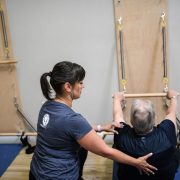
What If Your Back Pain Didn’t Have to Follow You Into 2026?

What If Your Back Pain Didn’t Have to Follow You Into 2026?

As the year winds down here in the Seacoast, many people in Portsmouth and the surrounding New Hampshire area take time to reflect on the last twelve months. You might think about your accomplishments, challenges, and the changes you hope to make in 2026. It’s a natural rhythm as the calendar turns over — and with it often comes the desire for a fresh start.

But one thing people rarely reflect on is their musculoskeletal health. We often focus on appearance, weight loss, and goals we can measure on a scale or in the mirror. What gets overlooked are the subtle physical signals that something is “off.”

Nagging back pain is a perfect example.

It’s easy to brush off, label as normal, or assume it’ll disappear on its own. Back pain slowly becomes something you adapt to without realizing it — you change how you bend, avoid activities, modify how you sit or sleep. Without careful attention, back pain blends into the backdrop of everyday life.

So if there’s one thing worth leaving behind in 2025, it’s the back pain that’s been following you around for months — or even years. And despite what you may have been told, you do not have to carry this year’s pain into the next one. When you finally understand how back pain works, addressing it becomes one of the most important steps you can take for your long-term health.


Back Pain Rarely Arrives “Out of Nowhere”

Back pain might feel sudden, but there’s almost always a buildup behind it. Most back problems develop gradually — from months or years of poor bending habits, long hours of sitting, repetitive strain, or small compensations your body makes without your awareness.

Then one day you sneeze, lean forward, or twist just a little too far… and suddenly, you’ve “hurt your back.”

People blame the moment — but the real cause is what’s been simmering underneath.

The holidays (and other busy seasons) make this worse:

  • more sitting while traveling
  • more lifting, decorating, and preparing
  • more time on soft couches or guest beds during family visits

The body is already managing everyday stress — and the added strain of the season pushes it beyond what it comfortably tolerates.

The good news? Once you understand that back pain is rarely random — but rather the result of microhabits over time — you can start correcting it. Small adjustments in how you bend, sit, lift, and move can make a remarkable difference.

Before long, not only will you have less back pain… you’ll have far more control over it.

And that kind of control changes everything.


Back Pain Doesn’t Just “Go Away”

Many people hope their back pain will fade once the holidays end and life settles down. But pain that lingers into the new year rarely behaves that way.

When your back is aggravated from mechanical or movement problems, time alone won’t fix it. Rest may help temporarily, but unless you address how you move, sit, bend, or load your spine — the pain returns (often worse).

This is why so many people start January strong, only to be sidelined by February. They unknowingly bring unresolved back pain into their new routines.

Although exercise is one of the best long-term solutions for back pain, it isn’t simple:

  • No pain? Exercise is excellent prevention.
  • Already in pain? You need very specific corrective movements first.

When your foundation isn’t solid, even the best fitness plan can derail. Back pain affects everything — how you walk, lift, twist, breathe, sleep, and even how much motivation you feel.

Don’t wait for back pain to “go away” on its own. And be cautious of quick-fix New Year’s programs that layer new problems on top of old ones. Ignoring your back now may leave you worse off in 2026 than you planned.


Most Back Pain Has a Mechanical Cause — and a Natural Fix

Here’s the encouraging part: about 80% of back pain can be resolved naturally once you understand its mechanical origin.

Your spine is remarkably resilient. It’s designed to move, adapt, and support you for decades — even with arthritis or bulging discs.

When pain appears, it’s usually signaling that something in your movement pattern needs attention.

Your body gives clear clues:

  • certain movements feel better
  • others make symptoms worse
  • pain may change throughout the day

These patterns tell a far more accurate story than any X-ray or MRI.

Once your movement “story” is understood, meaningful change and lasting relief become possible.

A new year is the perfect time to leave unhelpful habits behind. You don’t have to wake up stiff, brace every time you bend, or avoid activities you love because you’re afraid of making things worse.

Small, strategic changes — paired with guidance from the right expert — can transform everything.

If your goal is to leave back pain behind in 2025 and start 2026 feeling stronger, more mobile, and more confident, consider consulting with a mechanical back pain specialist. We help people across Portsmouth, Dover, Rye, Kittery, and the greater Seacoast get natural, lasting relief every day.

Or reach out to me personally — I’m always happy to help.


Dr. Carrie Jose, Physical Therapy Specialist and Mechanical Pain Expert, owns CJ Physical Therapy & Pilates in Portsmouth, NH, and writes for the Seacoast Media Group.

To get in touch — or request a free discovery visit with one of our specialists — visit our website or call 603-380-7902.

Back Surgery: Why it fails and do you need it

Approximately 500,000 Americans undergo back surgery to relieve their pain every year, and according to the Agency for Healthcare Research and Quality (AHTQ), this costs approximately $11 billion annually.

But what if I told you that only 5% of people undergoing back surgery actually need it – and worse – for many folks the pain ends up coming back. The American Society of Anesthesiologists estimates that 20-40% of back surgeries fail. If you’ve had repeated back surgery your risk of failure increases. Failed back surgery is so common that it’s gotten its own name – “Failed Back Surgery Syndrome” – which occurs when you experience continued pain in your neck, back, or limbs following any spine surgery meant to reduce pain.

So why then do we continue spending so much money on back surgery when the majority of people don’t actually need it – and when half the surgeries fail?

Back pain can be excruciating, debilitating, and have a significant impact on your quality of life and happiness.

If you’re in this situation, and told by a well-respected surgeon that surgery is your best option of taking your pain away and getting you back to living your life again, odds are good you will take that opportunity. And most of the time – surgery does take your pain away – initially that is.

But what surgeons don’t tell you is that your pain has a high likelihood of returning.

If you’ve had one “successful surgery” – you assume the next will go the same. But as mentioned above – the more back surgeries you have – the more likely they are to fail – and the vicious cycle begins.

So when should you get back surgery?

If you’ve had an accident or trauma that has resulted in major damage to your spine – you need surgery.

If you have urgent compromise to one of your spinal nerves you also need surgery. But let me preface “urgent”.

Your symptoms will be progressive and severe.

Signs might include problems with your bowel and bladder, sudden and worsening foot drop (loss of strength and ability to lift your foot and toes), walking will be difficult and progressively worsen, and nothing will take your pain away – medication and rest will barely touch your symptoms.

These cases are rare – but do require surgery to quickly decompress your nerve before permanent damage ensues.

But 70-80% of the time, back pain is what we call non-specific or mechanical.

And surgery is not recommended – and rarely works for this type or back pain.

Mechanical back pain can be acute and last for a few days, or can be chronic and come and go. You might have nerve pain with numbness and shooting pain down your leg, but it won’t be urgent like the situation described previously. The pain you feel is typically caused by irritation to soft tissue structures, discs, muscles, and joints. But the root cause of this irritation is from something different – and that is what we need to care about.

It’s why 50% of back surgeries fail.

Let me explain…

When you get an MRI to see “what’s causing” your back pain – it will typically show some form of bulging disc, degenerative discs, or lumbar stenosis. You will likely be told that these findings are what’s causing compression and irritation to your nerves.

They might try injections and medication first, but when that doesn’t work, they’ll recommend surgery. But here’s the catch. These findings show up in 60-80% of all MRI’s when you’re over the age of 50. But not everyone with these “abnormalities” has back pain.

In other words, you can have two people of the same age, with equal-looking MRI’s, and one will have pain while the other doesn’t.

How does that happen?

What research has shown over the years is that what shows up in your images rarely correlates with what’s causing your back pain.It’s why so many back surgeries fail – because we are messing with “abnormal” findings that are in fact – quite normal for your age. So if the structures aren’t the problem – then what is?

Most back pain comes from poor movement habits and lifestyle.

Over time, repeated, unbalanced movements will exacerbate or cause irritation to these structures that are considered “findings”. But you can’t fix your back problem by only addressing where the symptoms are.

You have to address the root cause. This is typically some combination of restoring full and free mobility in your spinal joints and balancing out flexibility and strength. When you move correctly – these structures are no longer bothered – and neither is your back.

I know what you’re thinking – this sounds way too simple and perhaps you’ve already tried physical therapy or something similar and it didn’t work. Sadly, not everyone understands – or even agrees – with the concept of mechanical back pain in the way I’ve just explained it.

But trust me, when you find someone who does, you’ll be amazed at how easy it is to fix your own back. You can then keep the pain gone – without ever having to see the inside an operating room.

Back surgery can be costly – both to your bank account and mental well being.

That’s a lot of money to risk when there’s only a 50% chance of the surgery working. There’s an even better chance that your pain will come back. If there’s a complication of any kind, then you’re looking at more surgeries. This is an almost certain loss in quality of life.

It’s worth it to do your due diligence. Find a movement specialist who understands mechanical back pain and can keep you out of the operating room.

If you’re dealing with back pain now and want to learn more…

We will be talking all about this and more in our upcoming Masterclass for Back Pain & Sciatica Sufferers.

The Masterclass is free – and happening on January 24th from 6-7 pm via zoom. Reserve your seat HERE – spaces are limited – and there’s a limited number of spots left.