
Tag Archive for: footwear

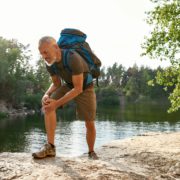
Love to Hike? 7 Strategies for Healthy Knees

Love to Hike? 7 Strategies for Healthy Knees

Hiking isn’t just good for the soul – it’s one of the best forms of exercise for longevity. Long, steady hikes typically put you in Zone 2 cardio, that sweet spot where your heart rate is elevated but you can still hold a conversation. Research shows Zone 2 training is one of the most powerful ways to build endurance, improve metabolic health, and protect your heart as you age. When you combine that with fresh air, nature, and the mental reset that hiking provides, you’ve got a recipe for living longer and healthier.

But here’s the catch…

If your knees hurt, you’re far less likely to get out on the trails and enjoy those benefits. For many adults in their 40s, 50s, and beyond, it’s knee pain – not lack of motivation – that sidelines them. Personally, I love to hike. My pup Bodie and I have already tackled 33 of the 48 White Mountain 4,000-footers together – and the last thing I want is for knee pain to derail that journey. Over the years, both in the clinic and on the trails, I’ve learned that protecting your knees isn’t just about avoiding injury – it’s about building mobility, balance, and strength so you can keep hiking and keep hitting that Zone 2 target for decades.

Here are 7 of my top strategies to keep your knees healthy on the trails:

1. Strengthen More Than Just Your Legs

Most hikers know strong legs matter. But what often gets overlooked is the role of your hips and core. Your glutes and hip muscles stabilize your pelvis, which in turn keeps your thigh bone – and your knee – aligned. If these areas are weak, your knee takes the brunt of every single step. On a typical 4K-footer, I rack up around 27,000 steps. Imagine your knee compensating on each one. Prioritize exercises that target glutes, hip stabilizers, and core muscles. Think bridges, planks, side steps, and single-leg work. The stronger your foundation, the better your knees will perform under pressure.

2. Keep Your Knees (and Hips) Mobile

Lack of mobility in your knees and hips – even a subtle loss – can impact the way your knees function. Your knees should fully straighten, bend deeply, and even hyperextend a little. Without this range, your knees can’t absorb the demands of steep inclines, rock scrambles, or uneven terrain. But don’t just focus on your knees – your hips and ankles need to move freely too. When one joint stiffens, another (often your knee) has to compensate. If your knees feel achy, check to make sure stiffness isn’t the reason.

3. Optimize Your Balance

Uneven trails, water crossings, and rocky descents demand excellent balance. Without it, your knees may end up working overtime to stabilize you. You can improve balance by practicing single-leg activities, such as standing on one foot while brushing your teeth, then progressing to single-leg squats and step-downs. Dynamic drills like walking heel-to-toe on a line or using a balance pad to mimic trail conditions can also be effective.

4. Train Eccentric Strength (Downhill Prep)

Most people’s knees flare up going downhill, not uphill. That’s because downhill hiking demands eccentric strength – the ability of your quads and even hips to control your descent while resisting gravity. Exercises like slow step-downs, controlled squats, and reverse lunges train your body for this exact stress, protecting your knees from strain when descending steep terrain.

5. Don’t Neglect Recovery

It’s easy to focus only on training for the hike, but recovery is just as important for keeping knees healthy long-term. Muscles and connective tissues adapt and get stronger when you give them time to repair. Simple recovery practices like foam rolling, stretching, and staying hydrated and prioritizing sleep all help reduce inflammation and improve resilience for the next hike. And if your knees are particularly sensitive after a hike – regenerative treatments like shockwave therapy and EMTT can help your joints recover quickly and naturally.

6. Choose Footwear That Supports Your Mechanics

Footwear can make or break your knees on the trails. Poor support or worn-out soles force your knees to work harder with every step. Good shoes aren’t just about cushioning – they should work with the way you move and give you stability when the trail gets rough. Keep in mind that your feet often widen and swell as you hike, which can change how your shoes fit and affect your mechanics. Choosing shoes with enough room in the toe box and proper support for your arches can prevent your knees from picking up the slack. Don’t forget the basics either – replacing trail shoes regularly (every 300–500 miles) is just as important as any strengthening exercise.

7. Get Checked Before It’s Too Late

One of the most overlooked strategies for preventing knee pain is early intervention. If you notice stiffness, swelling, or pain that doesn’t improve with movement, it’s better to get evaluated sooner rather than later. The longer you push through, the more compensations build up – and the harder it is to fix. In the same way you wouldn’t wait for your car to break before servicing it – you don’t want to wait for your knees to fail before seeking help.

Knee pain doesn’t have to stop you.

Hiking is one of the simplest and most enjoyable ways to support your health. It builds strength and endurance, keeps your heart and lungs working efficiently, and connects you to nature. But none of those benefits matter if knee pain keeps you on the sidelines. By strengthening your hips and core, improving mobility, training balance and eccentric control, choosing the right footwear, recovering properly, and seeking help early if pain persists – you’ll give your knees the best chance to keep carrying you up (and down) the trails for years to come.


 

How to Survive Flip-Flop Season Without Wrecking Your Feet

Flip-flop season is here – which means sunshine, beach days, and pool time. But it can also mean extra foot pain. And every summer around this time, we see an influx of people dealing with aching arches and stabbing heel pain – most commonly known as “plantar fasciitis”

What is Plantar Fasciitis?

Quite simply, it’s inflammation of your plantar fascia – the tissue that makes up the arch (bottom) of your foot. Your plantar fascia runs from the base of your heel, down the length of your foot, and into your toes. It’s responsible for both the mobility and stability of your foot, enabling you to propel yourself during walking and running. When you land on your foot, your arch falls or flattens – this is called pronation. In response, your foot then stiffens or supinates, providing the power to push off. If any part of this mechanism is not functioning properly, your plantar fascia can become stressed and overworked, leading to what we call “plantar fasciitis”.

How Do Flip-Flops Contribute?

Footwear can either “protect” your arch or cause it to overwork. Technically, if your foot mechanics are sound and the arch of your foot is strong and mobile, footwear should have a negligible impact on your plantar fascia. However, due to prolonged sitting and limited barefoot walking, the bottoms of our feet are not as conditioned as they should be. This is the real problem – not so much what you put on your feet. If you’re used to wearing supportive and cushioned shoes and then suddenly switch to flatter, less supportive flip-flops, it can shock your foot. And if you’re already prone to plantar fasciitis, it will flare up easily and quickly.

What Can You Do?

The good news is you don’t have to give up your favorite summer footwear entirely – you just need to be smart about how you wear them and how you care for your feet. Here are five simple tips and strategies to help you get through flip-flop season without completely wrecking your feet.

1. Choose Supportive Styles

Not all flip-flops are created equal. Those flat, flimsy styles you can pick up at the drugstore for five bucks? Probably not doing your feet any favors. They offer little to no support, and if your foot mechanics aren’t perfect, you’re asking a lot of your plantar fascia every time you take a step. A better choice is a flip-flop that gives you a bit of arch support and structure. Look for ones with a cushioned sole, some contouring through the arch, and even a slight heel cup to help stabilize your foot and keep it from sliding around. The right pair makes a big difference – a key factor for enjoying flip-flops pain-free.

2. Save Them for Short Distances

Even the most supportive flip-flop has its limits. They’re not designed for long walks, hours of standing, or sightseeing on vacation. Think of them like you would a slipper – something you wear for convenience or comfort in short bursts, not as your all-day shoe. If you’re going out for a full day of walking, or standing at an outdoor event, it’s better to switch to something more structured that supports your foot and ankle. Use your flip-flops strategically – around the house, to and from the pool, or for short errands. Giving your feet the right support when it matters most can go a long way in keeping them pain-free.

3. Strengthen Your Feet (and Your Core)

One of the best ways to prevent plantar fasciitis – or keep it from coming back – is to strengthen the muscles that support your arch and stabilize your entire lower body. Most people don’t think about exercising their feet, but they absolutely should. Working on things like toe strength, arch activation, ankle mobility, and balance helps condition your feet so they can handle different surfaces and demands. But don’t stop at your feet – your core matters too. The way your pelvis and deep abdominal muscles function has a direct impact on how forces move through your body when you walk. A weak or poorly functioning core can lead to poor movement patterns that put extra stress on your feet. Strengthening both your feet and your core can transform the way you move – and reduce the load on your plantar fascia dramatically.

4. Stretch and Massage Regularly

One of the most underrated things you can do to prevent or treat plantar fasciitis is to stretch and massage your feet on a regular basis. Tight calves, stiff ankles, and tension through the soles of your feet can all contribute to pain and inflammation. A few minutes of daily stretching – focusing on your calves and toes – combined with massage using your hands, a lacrosse ball, or a mobility tool, can make a huge difference. This kind of soft tissue work helps relieve tension, improves circulation, and keeps your plantar fascia mobile and healthy. 

5. Don’t Ignore Persistent Pain – Treat It Early

If you’re already feeling pain in your heel or arch that just won’t go away, don’t wait around hoping it gets better on its own. Plantar fasciitis becomes harder to treat the longer it sticks around, and it can quickly go from annoying to chronic. When that happens, exercise and stretching might not be enough to get you out of pain – and that’s where regenerative therapy comes in. Shockwave therapy (EPAT) is a non-invasive treatment that uses high-energy sound waves to stimulate blood flow and break up tight, inflamed tissue. It helps jumpstart healing in a way that rest and stretching can’t. EMTT (Extracorporeal Magnetotransduction Therapy) takes this even further. It uses pulsed magnetic fields to penetrate deeper into tissues and promote healing at the cellular level. Together, shockwave and EMTT are incredibly effective at reducing pain, accelerating recovery, and allowing you to tolerate the exercises and movement you need to fully resolve your plantar fascitis.

Bottom Line

Flip-flops don’t have to be the enemy. But if you’re not taking care of your feet, wearing them can easily lead to pain and frustration. By choosing the right styles, wearing them in moderation, and taking the time to strengthen and care for your feet – you can enjoy them all summer long without paying the price. And if foot pain does creep in, don’t ignore it. Get the right help early. Treatments like shockwave and EMTT, combined with expert-guided movement and strengthening, could be exactly what you need to survive flip-flop season pain-free – and keep your feet happy long after summer ends.